
SMART TRANSFORMATION IN EDUCATION WITH ARTIFICIAL INTELLIGENCE
Empowering Education with AI – Erasmus+ Small-Scale Partnership
KA210-SCH-DA028F59
Empowering Education with AI – Erasmus+ Small-Scale Partnership
KA210-SCH-DA028F59
Project Acronym: Smart edu AI
The project "SMART TRANSFORMATION IN EDUCATION WITH ARTIFICIAL INTELLIGENCE" (Smart edu AI) is a Small-scale partnership in school education (KA210-SCH) under the Erasmus+ Programme. It has a duration of 24 months, starting on January 1, 2025, and ending on December 31, 2026, with a total lump sum budget of €60,000
Main Objectives and Priorities: The project aims to integrate Artificial Intelligence (AI) technologies
into educational processes to support individual learning and development. Its core objectives are:
• Using Student-Centered AI Applications in the Learning Process: Offering personalized learning
experiences tailored to individual styles and paces through adaptive learning technologies.
• AI Training for Teachers: Enhancing teachers' digital skills to enable them to create more
personalized and effective learning environments.
• Individual Learning Analysis and Feedback Mechanism: Utilizing AI to analyze student learning
data,
identify strengths and weaknesses, and adapt teaching strategies accordingly.
• Ensuring Equality of Opportunity in Education: Employing AI technologies to create an equitable
learning environment for disadvantaged students, helping overcome barriers like language differences and
special needs
Eurolab for Teachers was founded five years ago by experienced teachers and trainers, with a mission to deliver high-quality professional development across Europe. Through the Erasmus+ program, a range of specialised courses blends modern teaching strategies, innovative tools, and intercultural perspectives—enhancing skills, fostering creativity, and promoting both personal and professional growth.
Website
Founded in 1627 by Blessed Mother Zofia Maciejowska-Czeska, is Poland’s oldest girls’ school, now coeducational for ages 7–19. Grounded in Christian values and nearly 400 years of tradition, it blends heritage with modern teaching. The school offers diverse extracurriculars like music, sports, language exchanges and international partnerships.
Website
Public institution for gifted students, specializing in innovative research, teacher training, and AI project testing. Provides collaborative support and education for gifted students in an inclusive environment. The center carries out numerous national and international project activities, including intelligence game tournaments, digital design workshops, eTwinning projects, and math olympiads.
Website
NGO supporting disadvantaged groups through educational, cultural, and digital projects, with expertise in AI and ethics. Offers training on technology planning models, technology integration strategies, and digital tools such as Web 2.0, augmented and virtual reality, and generative AI. France Culture Connection was selected for its outstanding work in AI education and its proven track record in developing advanced educational materials.
Website
Multilingual public center recognized for innovative teaching, focusing on disadvantaged students and AI impact analysis.A public integrated multilingual center (kindergarten, primary, and secondary) with about 400 students. It is recognized as one of the most innovative schools and is part of the Galician digital education network. It participates in multiple educational innovation projects.
Website
Erasmus+ is the EU’s program for education, training, youth, and sport, offering opportunities to study, train, and collaborate across Europe and beyond. It promotes skills, inclusion, innovation, and cultural exchange, while supporting priorities like digital transformation, sustainability, and equal opportunities. It connects individuals, schools, and organizations, fostering cooperation and mutual understanding.
WebsiteThe project titled "SMART TRANSFORMATION IN EDUCATION WITH ARTIFICIAL INTELLIGENCE" (Smart edu AI) will run for 24 months from January 1, 2025, to December 31, 2026. Its main goal is to support personalized learning and development by integrating artificial intelligence (AI) technologies into education. The project focuses on developing student-centered AI applications, training teachers in AI tools, and ensuring equal educational opportunities. It also emphasizes individual learning analysis, data analytics, and sustainable environment skills.
Aligned with Erasmus+ priorities, the project addresses digital transformation, environmental sustainability, climate action, and teacher support. Key themes include AI and data use, ecological skills, inclusion, equality, and non-discrimination.Target groups include students across primary, secondary, and high school levels, especially disadvantaged learners, students with special needs, language barriers, and gifted students. Teachers, educational institutions, administrators, and policymakers are also involved.
Key activities involve AI-assisted training and workshops for teachers and students, carbon footprint reduction and sustainability workshops, AI applications in digital design and music practice, AI-supported teaching for disadvantaged students, augmented reality and simulation science experiments, and feedback sessions. Four main activities are led by partners in France, Spain, Turkey, and Poland.
Expected outcomes include enhanced student learning experiences and academic performance, improved digital literacy for teachers, a data repository, innovative teaching methods, and increased environmental awareness. AI integration will personalize education, improve efficiency, and reduce teachers' workload.
The coordinating organization is Eurolab for Teachers (Poland), with partner organizations France Culture Connection (France), Düzce Milli Egemenlik Bilim ve Sanat Merkezi (Turkey), and Centro Público Integrado O Cruce (Spain).
Eurolab for Teachers was founded five years ago by experienced teachers and trainers, with a mission to deliver high-quality professional development across Europe. Through the Erasmus+ program, a range of specialised courses blends modern teaching strategies, innovative tools, and intercultural perspectives—enhancing skills, fostering creativity, and promoting both personal and professional growth. Courses are offered in several European countries, designed to address the evolving needs of educators and encourage best practices that make a real difference in the classroom. The mission: shaping the future of education—one empowered teacher at a time.
This public, non-profit center educates gifted students aged 8 to 13 with a dedicated team of 8 teachers serving 112 students. It offers workshops across STEM fields, robotics, AI, music, painting, coding, and more, using a project-based, process-oriented learning model that encourages students to create tangible products. With experience in international programs such as Erasmus+ and eTwinning, the center is responsible for researching innovative AI educational practices, piloting AI applications, gathering student feedback, and making necessary adjustments. Additionally, it manages the project website and leads dissemination activities. The center spearheads the activity “Exploring the Art of Science with Artificial Intelligence.”
France Culture Connection is an NGO committed to social inclusion and skills development for people with disabilities and disadvantaged youth. The organization promotes digital and green transitions through a wide range of artistic, sports, environmental, and digital projects. It provides training in technology integration and digital tools such as Web 2.0, fablab, augmented and virtual reality initiation, coding (Html, CSS, Javascript, Python), digital citizenship, and cyberbullying awareness. France Culture Connection leads AI education training programs for teachers and educational staff, oversees quality control and impact assessment, designs the project’s digital logo, and supports educational content development. It leads the activity “Artificial Intelligence Training For Educators.”
A multilingual integrated public school in Galicia serving approximately 400 students aged 3 to 16, with a faculty of 50 teachers. Known for its innovative teaching methodologies and multilingual instruction in Galician, Spanish, English, and French, the school is part of the Galician digital education network, utilizing digital books extensively. It focuses on digitalization and AI integration in teacher training, ICT, robotics, coding, and STEM creativity projects through its Science Club. The school prioritizes environmental issues and works closely with disadvantaged students, advocating for supportive national policies. Centro Público Integrado O Cruce develops personalized AI-based educational programs, collects data on AI’s impact on equity and student performance, evaluates project outcomes, prepares reports for partners, and creates a digital brochure. It leads the activity “Artificial Intelligences Combine.”
Where Tradition Meets Modern Education Founded in 1627 by Blessed Mother Zofia Maciejowska-Czeska, the school continues the legacy of the oldest school for girls in Poland, now welcoming both girls and boys aged 7–19. Rooted in Christian values and inspired by the Virgin Mary, it combines nearly four centuries of educational tradition with modern teaching methods. Its mission is to shape the intellectual, emotional, and spiritual growth of students, nurturing respect, curiosity, and a love of learning. The school offers a wide range of extracurricular activities — from theatre, music, and sports to debate clubs, language exchanges, and savoir-vivre classes — as well as international cooperation with schools in Germany, Hungary, and Israel. With a warm atmosphere, committed teachers, and a forward-looking approach.
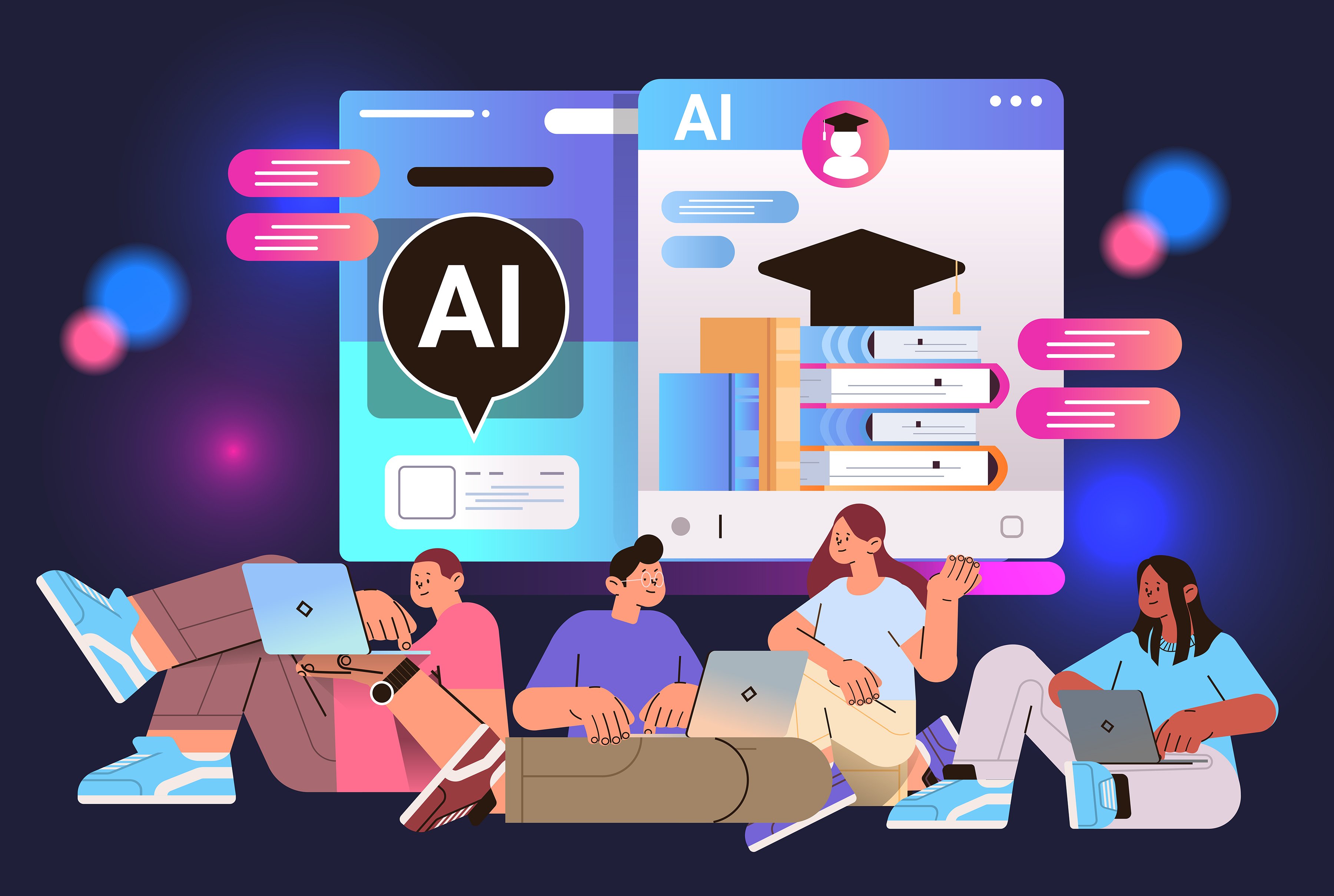
Personalized learning experiences tailored to individual learning styles and paces. Adaptive AI tools enhance learning management.

Improving educators' digital skills for more effective and personalized teaching. Addresses the global gap in AI tool readiness among teachers.
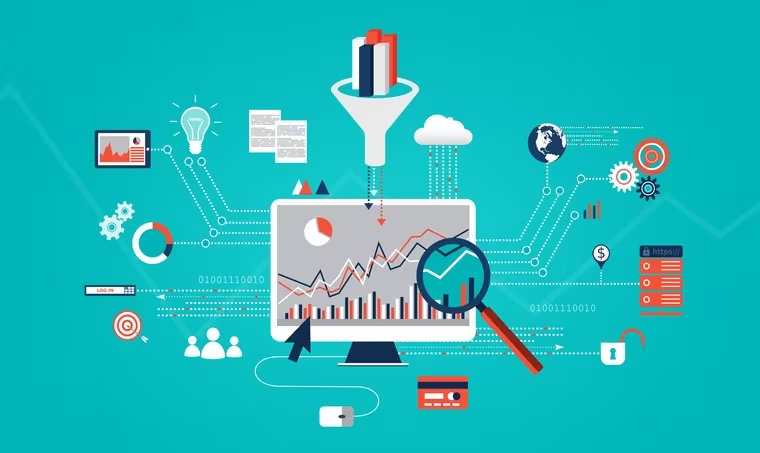
AI-based data analysis to identify student strengths and weaknesses, allowing tailored teaching strategies for better outcomes.

Breaking down barriers for disadvantaged students through AI solutions, improving performance regardless of background or abilities.

7-day program covering AI integration in teaching, lesson plans, AI-based tools, performance tracking, ethical AI, and digital pedagogy.
Focus on personalized learning for disadvantaged and migrant students aged 12-15 using AI for learning support.

AI-enhanced science experiments, music composition, and visual design activities fostering creativity, critical thinking, and tech literacy.

Using AI to raise environmental awareness, calculate carbon footprints, and design eco-friendly cities in interactive simulations.
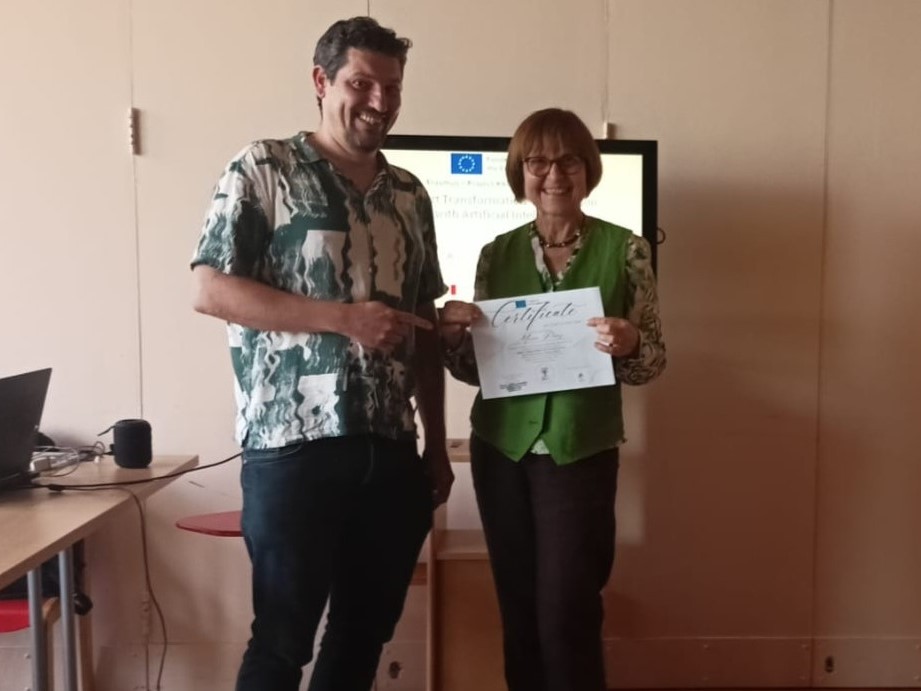
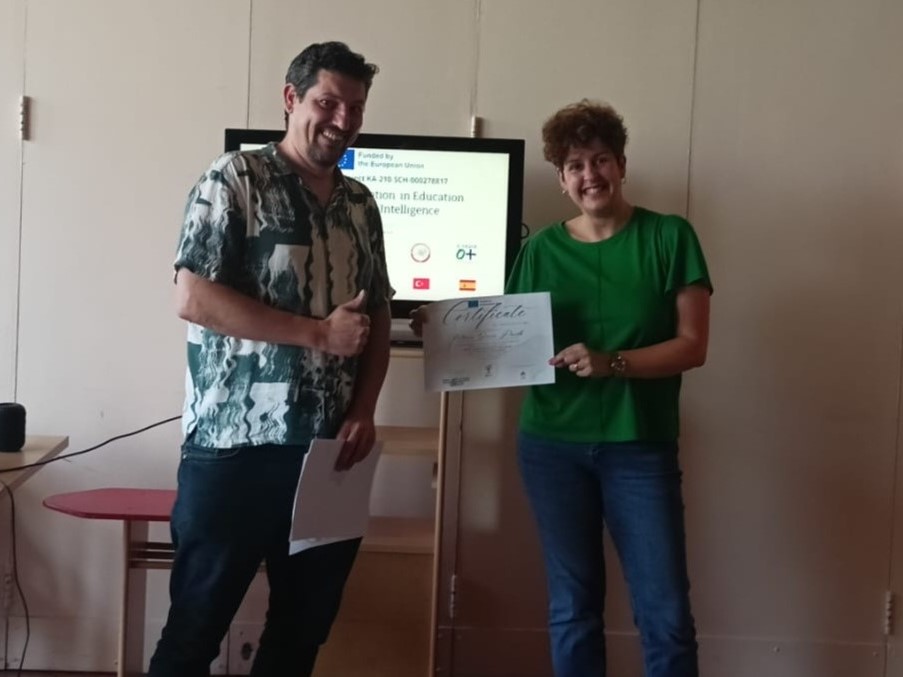
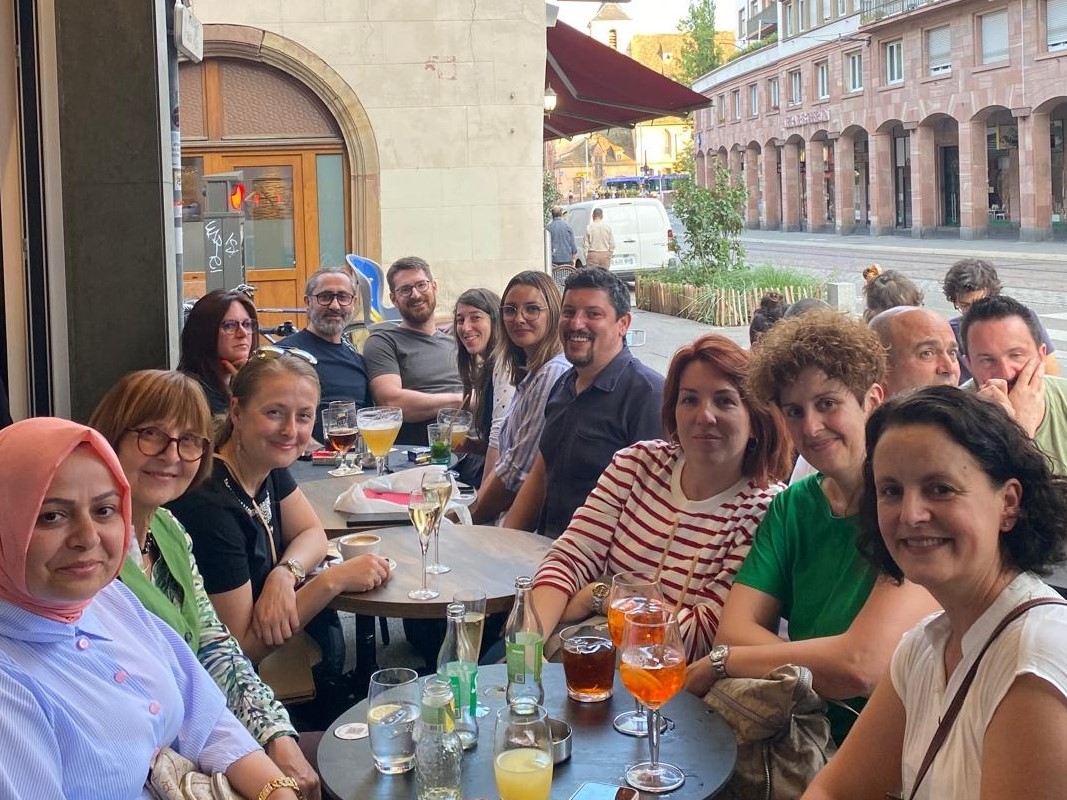
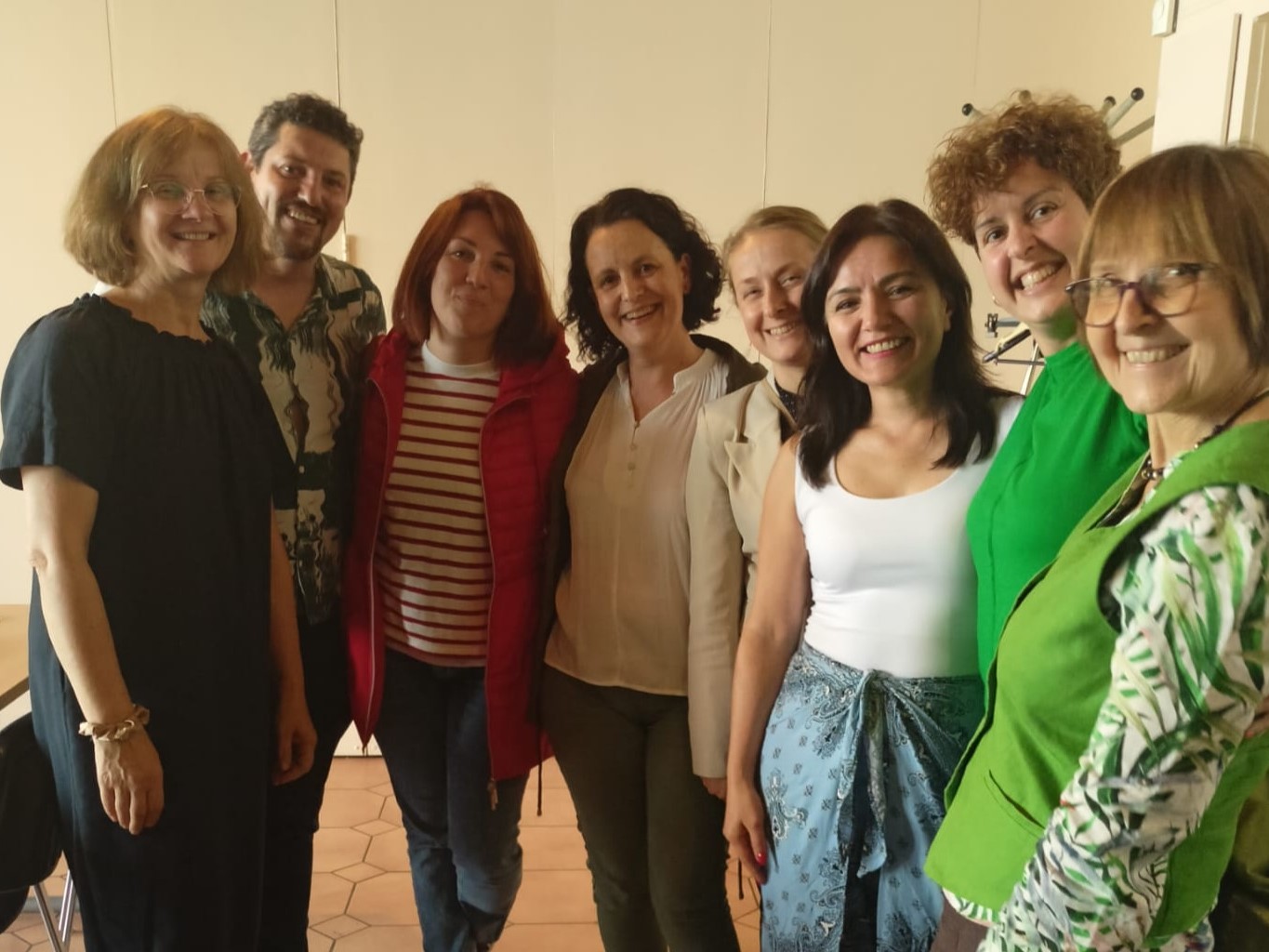
The "Smart Edu AI: A 5-Day Training Program for Youth Workers" is designed to empower educators and students through Artificial Intelligence. This international program, taking place from July 21st to 25th, 2025, in Strasbourg, France, involves partner organizations from Poland, Türkiye, France, and Spain, fostering global collaboration.
The program aims to provide practical training through hands-on workshops and group activities, focusing on pedagogical innovation and promoting responsible and sustainable AI use.
Opening speeches, icebreakers, and partner presentations set the stage. Expert talks define AI and explore its applications in education, introducing key technologies like Machine Learning, NLP, and Computer Vision. Discussions focus on why AI matters in education—enhancing accessibility, efficiency, and engagement.
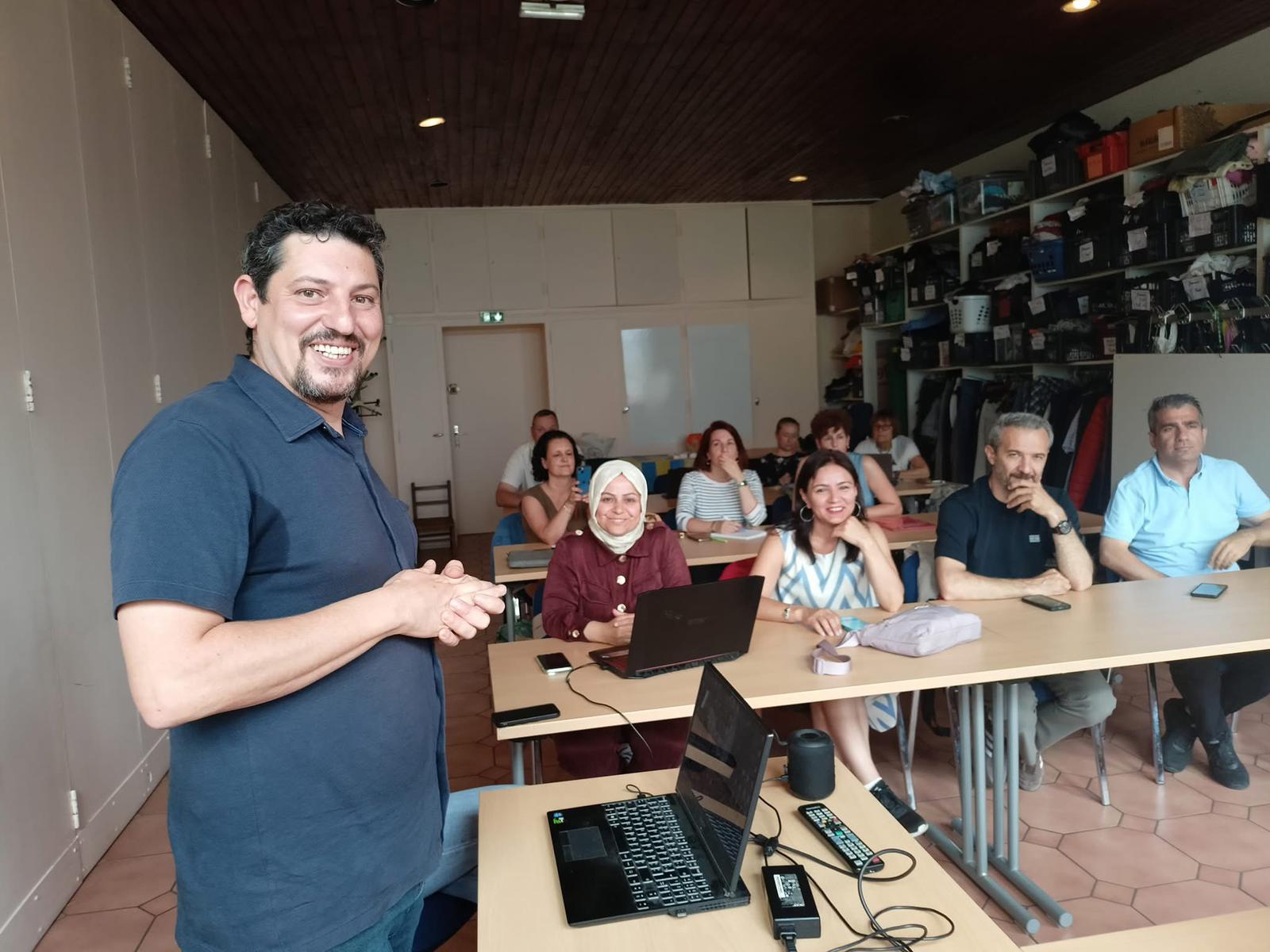
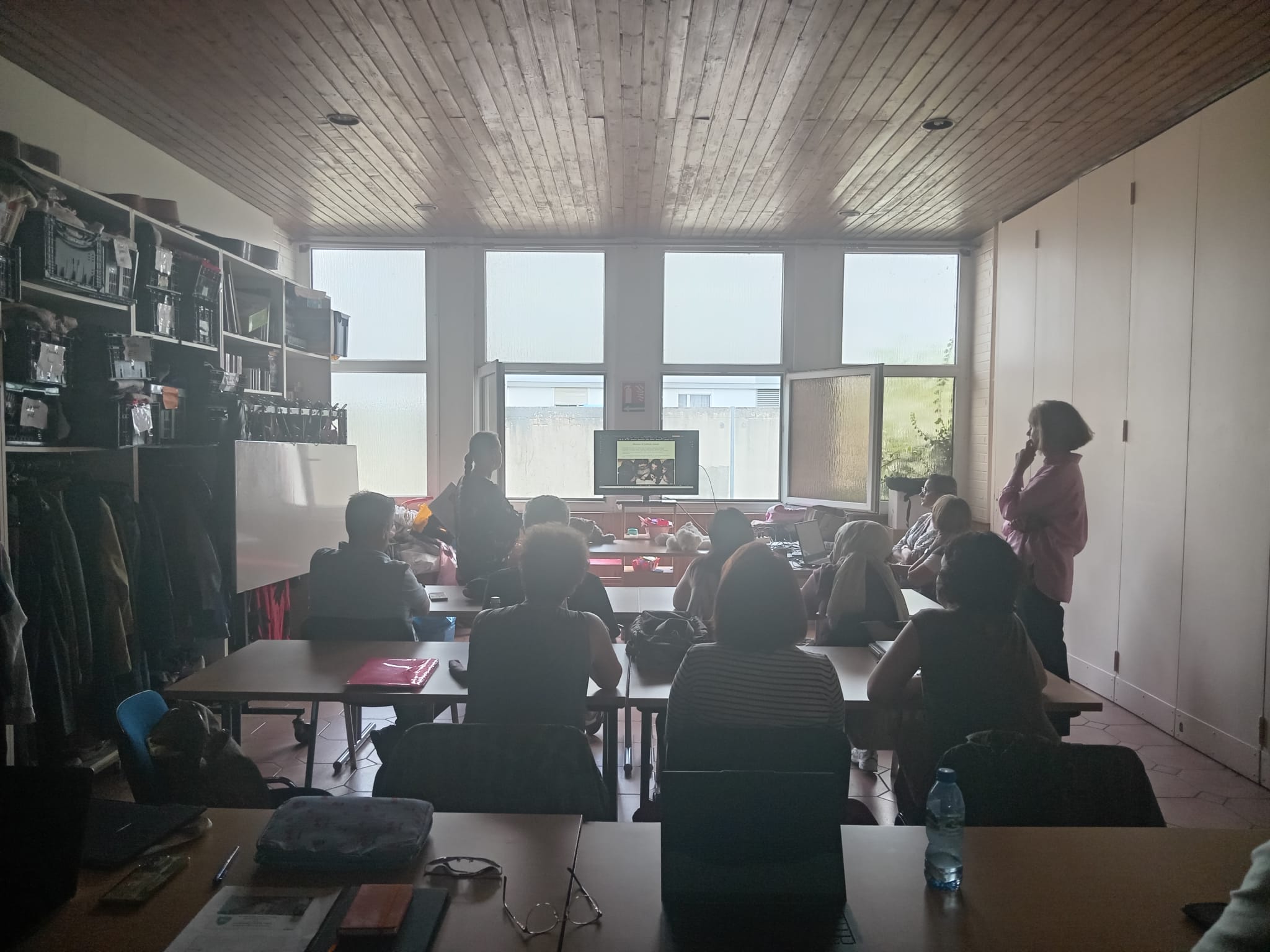
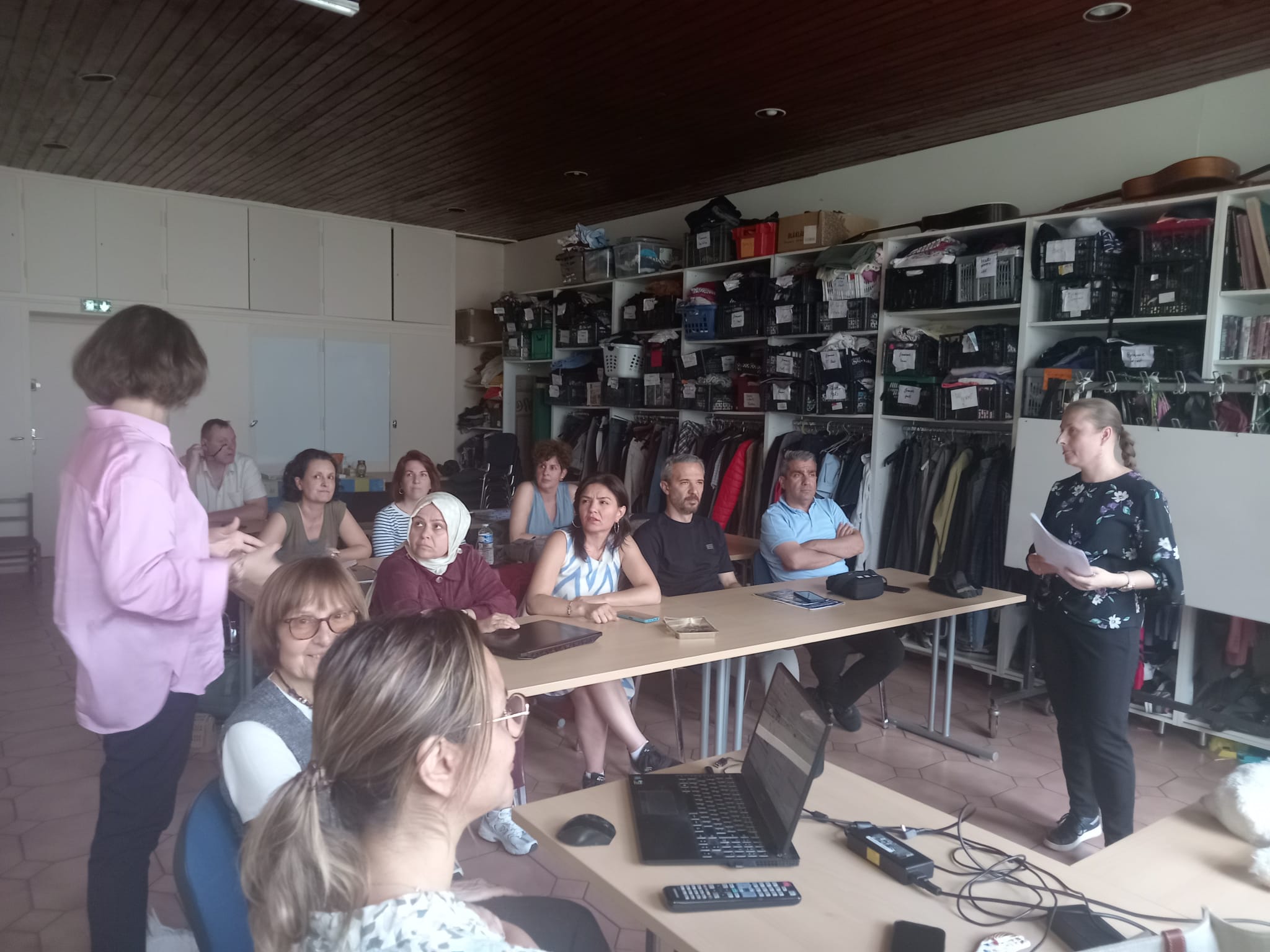
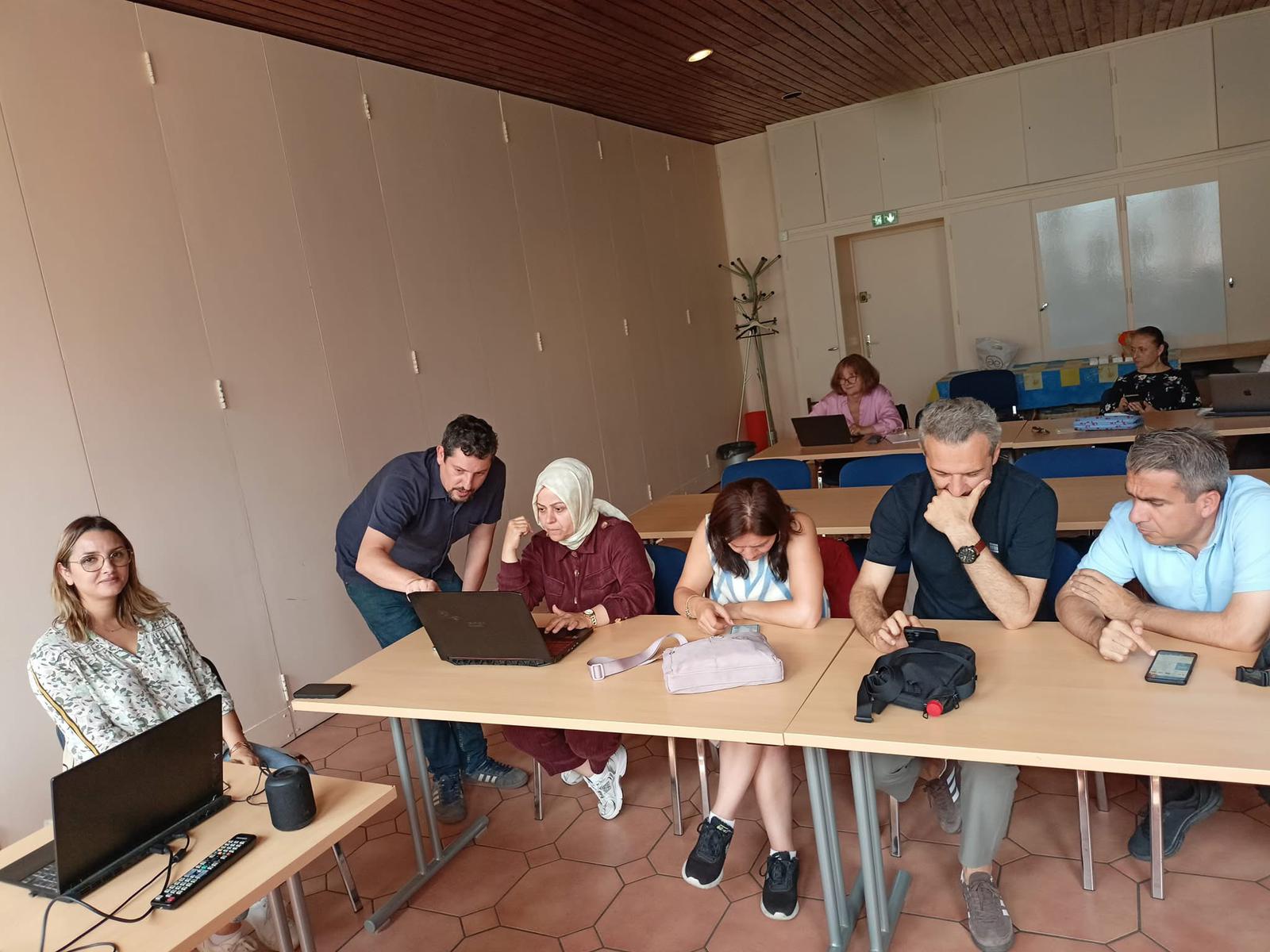
Focuses on integrating AI into lessons using pedagogical models such as Gagné's 9 Events and the 5E Model. Training on AI-based educational tools like ChatGPT, Quizlet, and Google Classroom. Group activities explore student-centered AI applications.
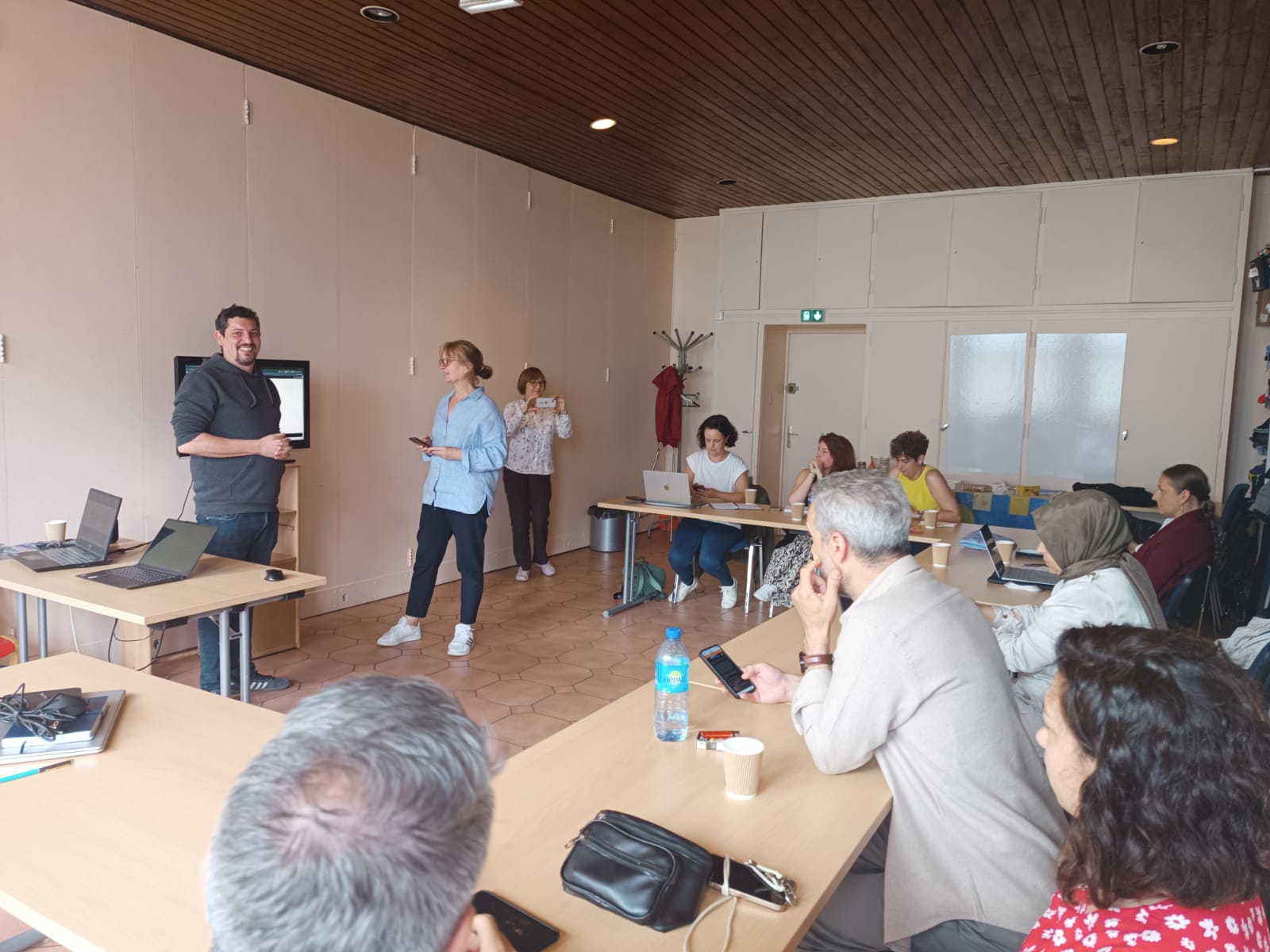
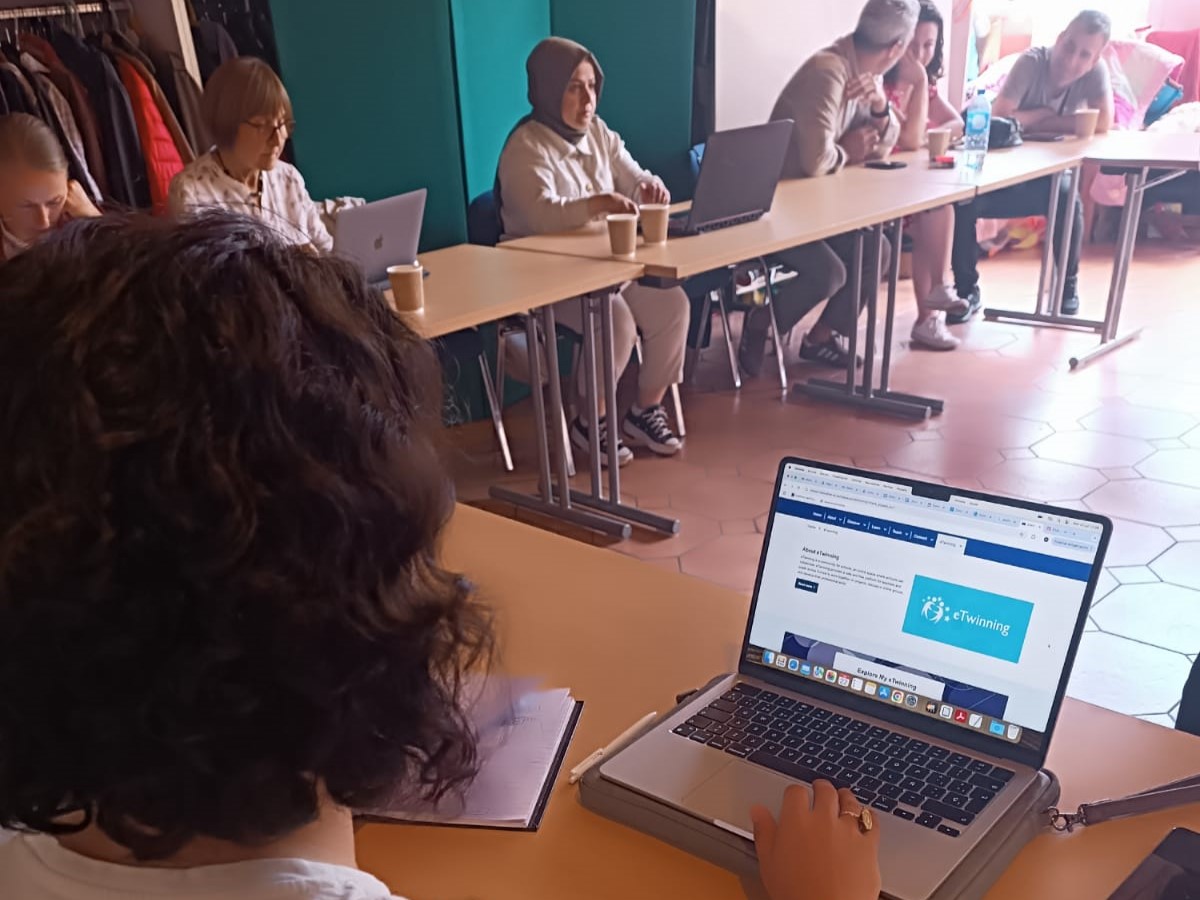
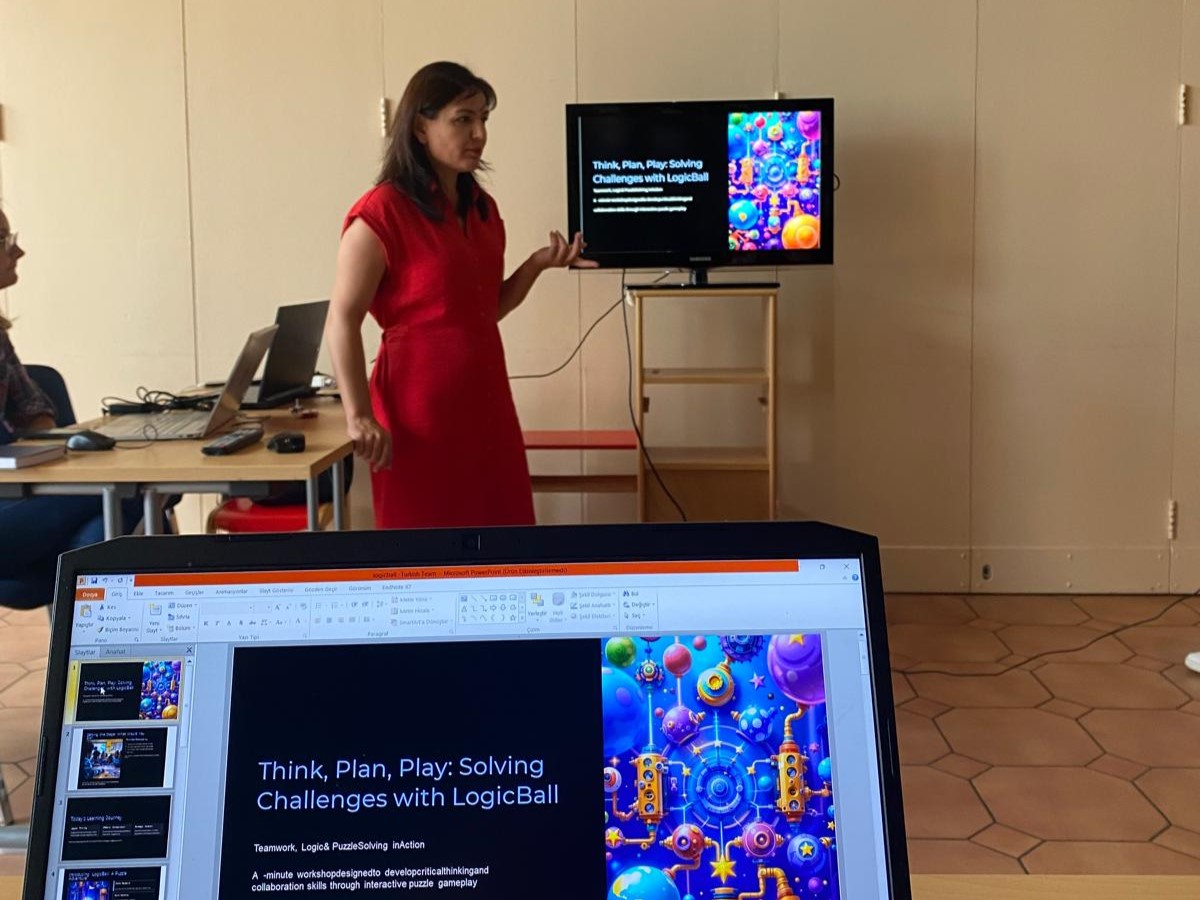
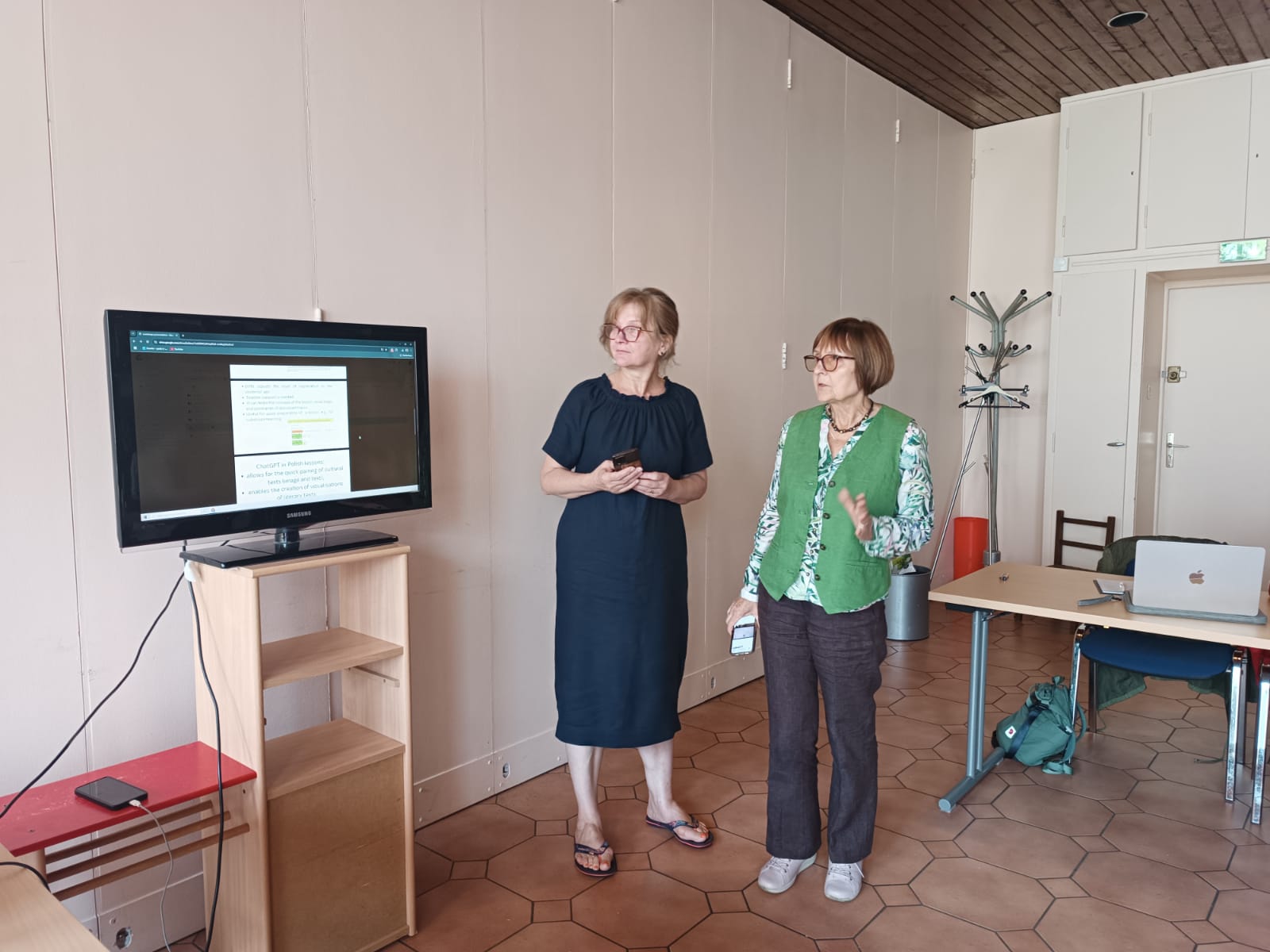
Covers project management tools like Trello, Slack, and Asana for educational projects, along with AI-based performance tracking. Ethical considerations such as data privacy, bias, and transparency are key discussions.
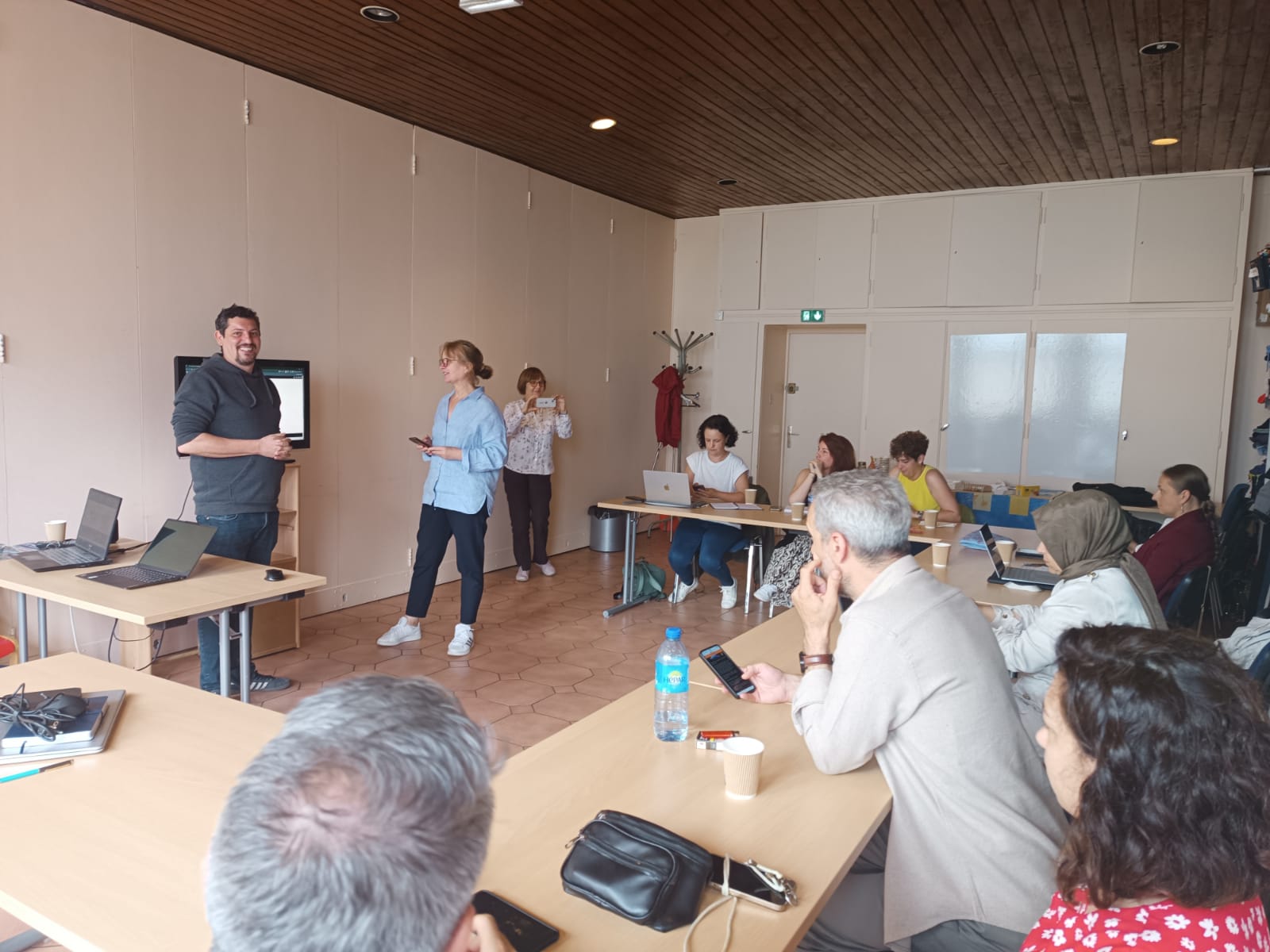
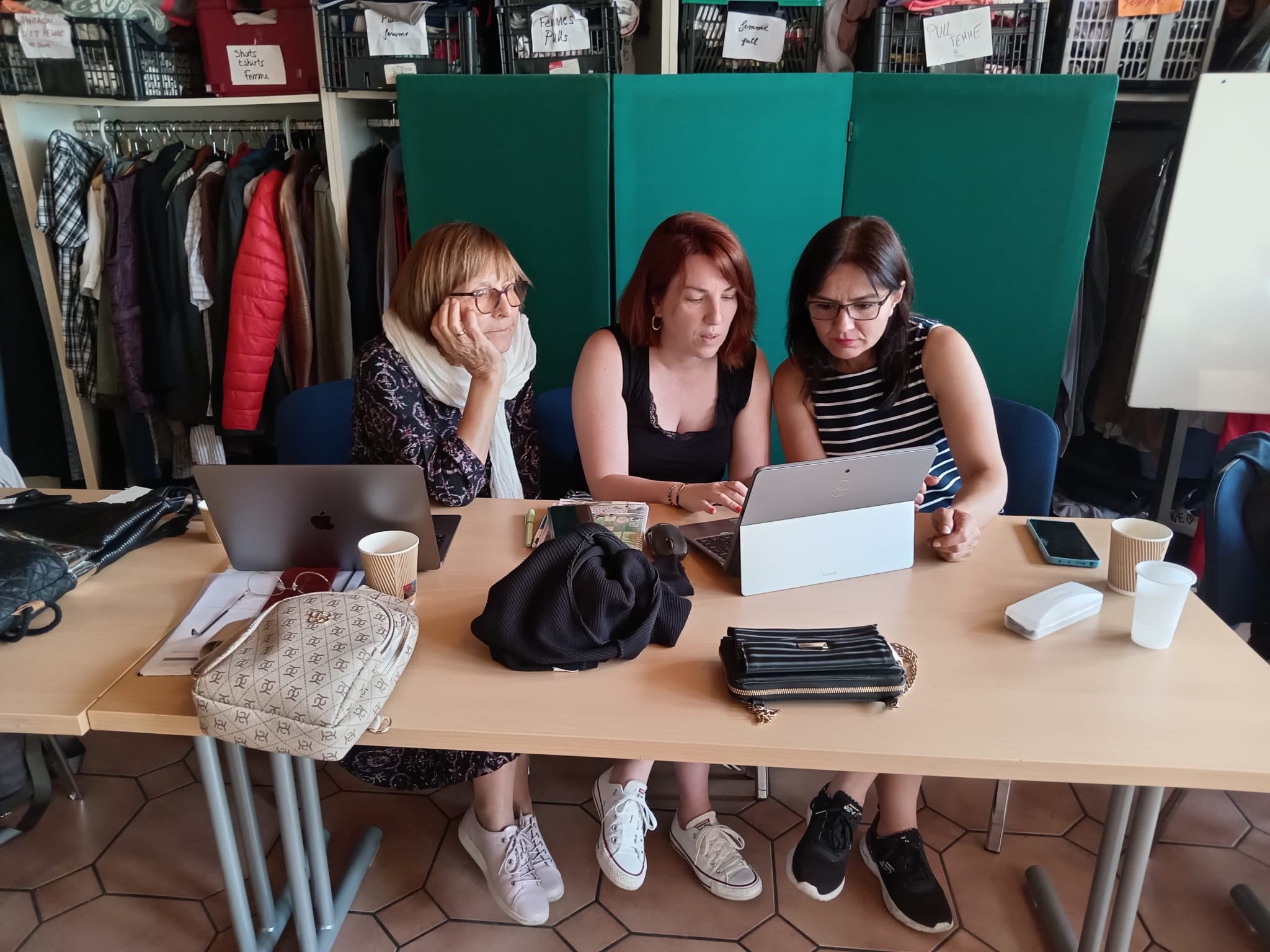
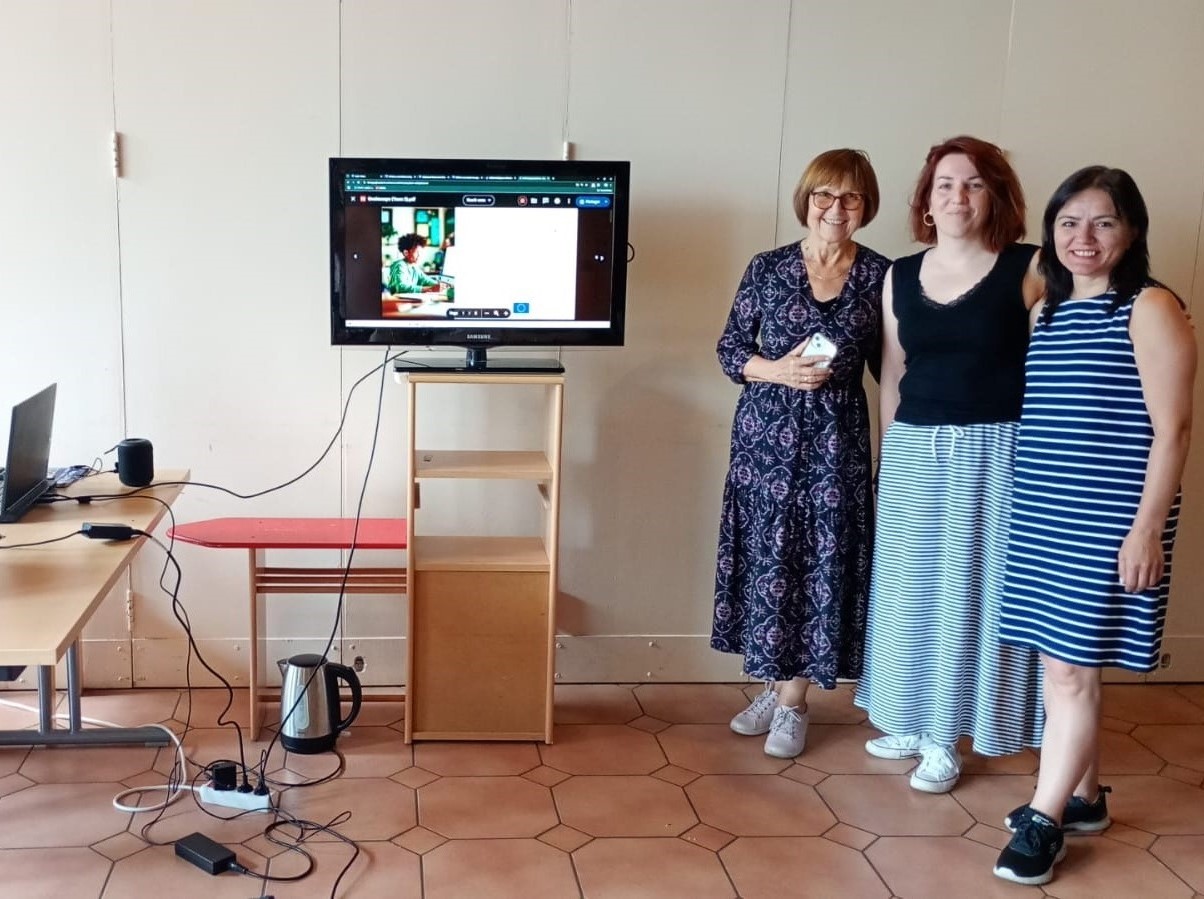
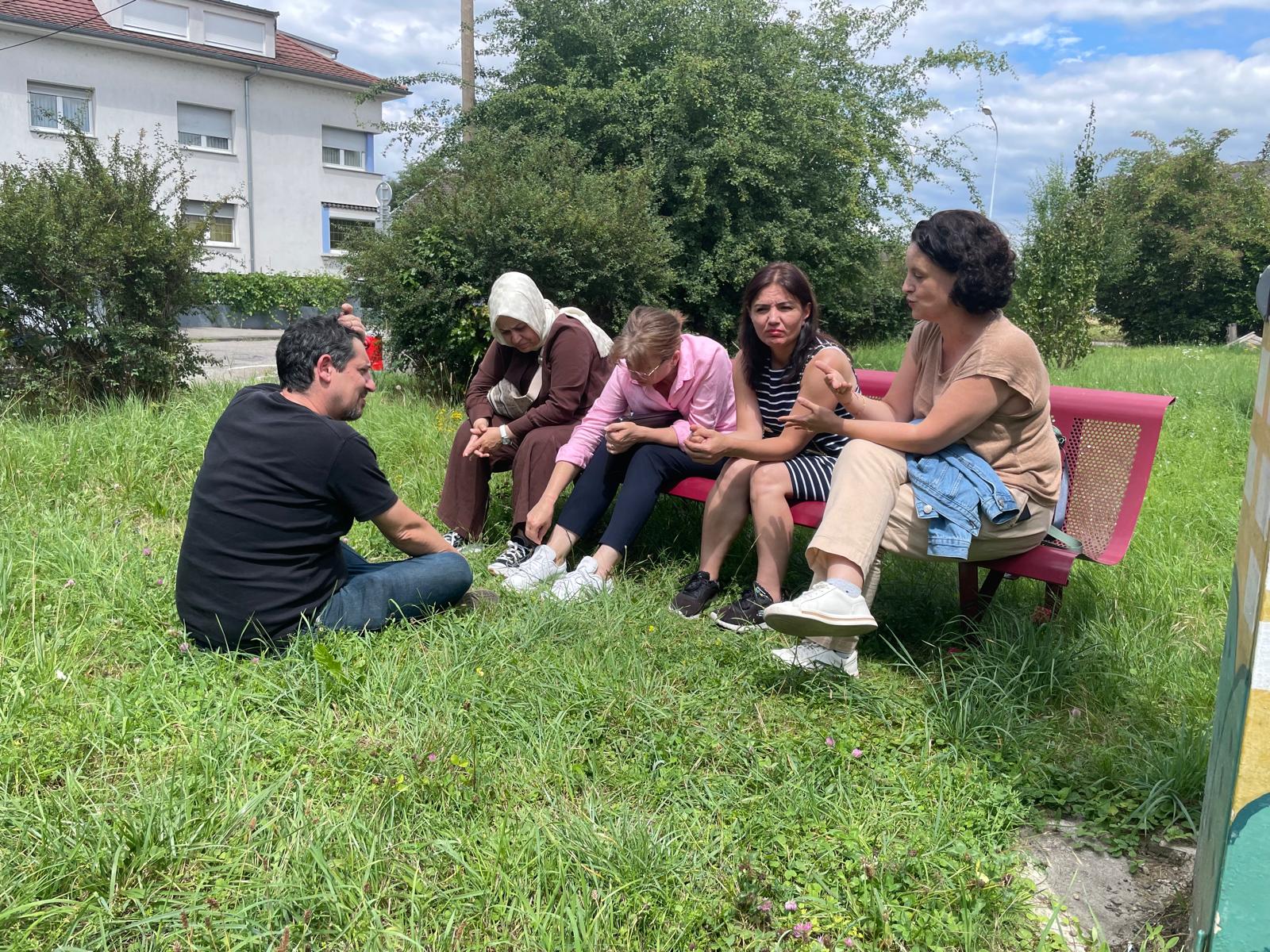
Hands-on AI workshops, AR/VR exploration, and gamification activities. Includes an AI for Data Analytics Workshop and discussions on how AI can support continuous teacher growth.
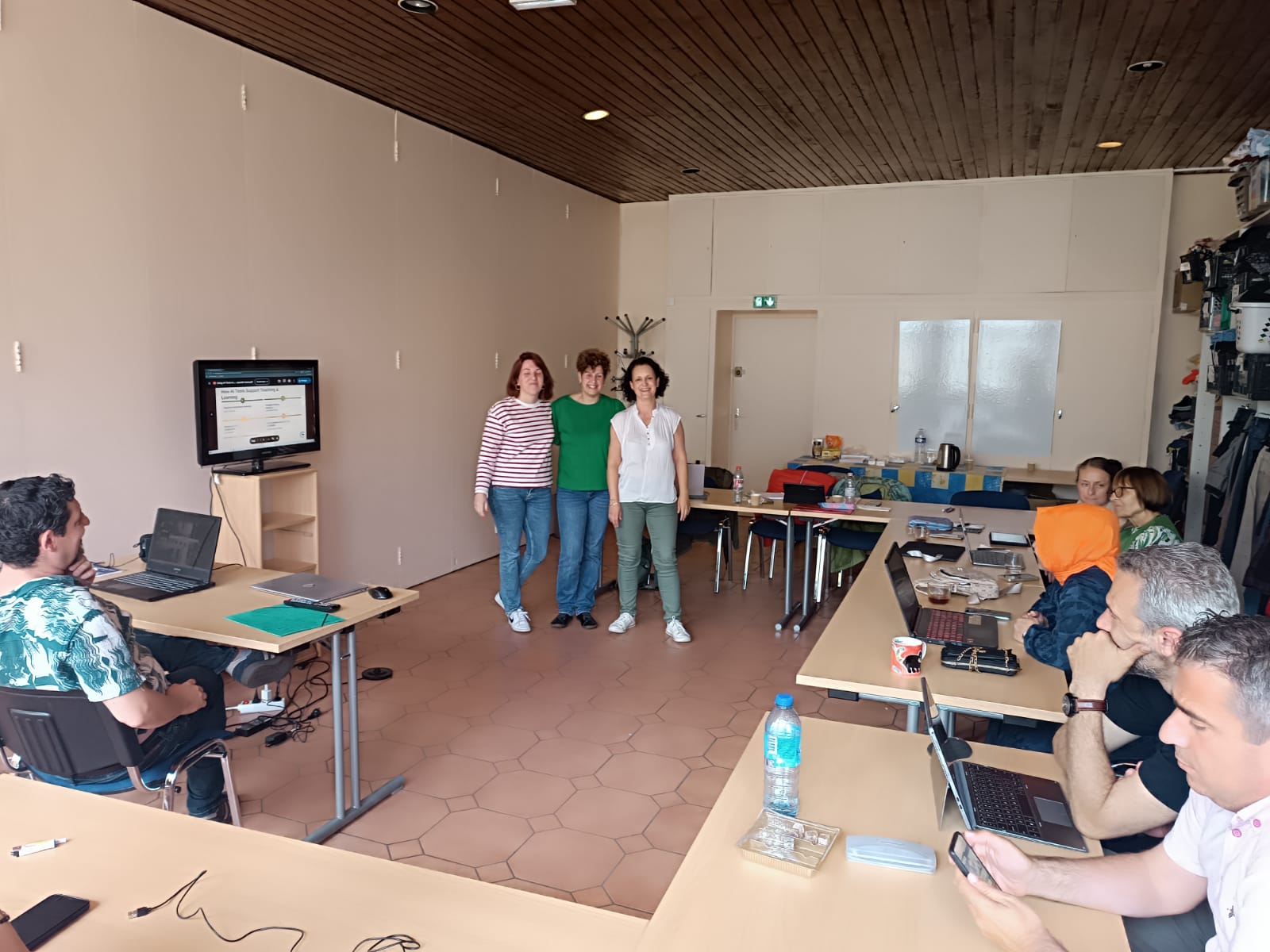
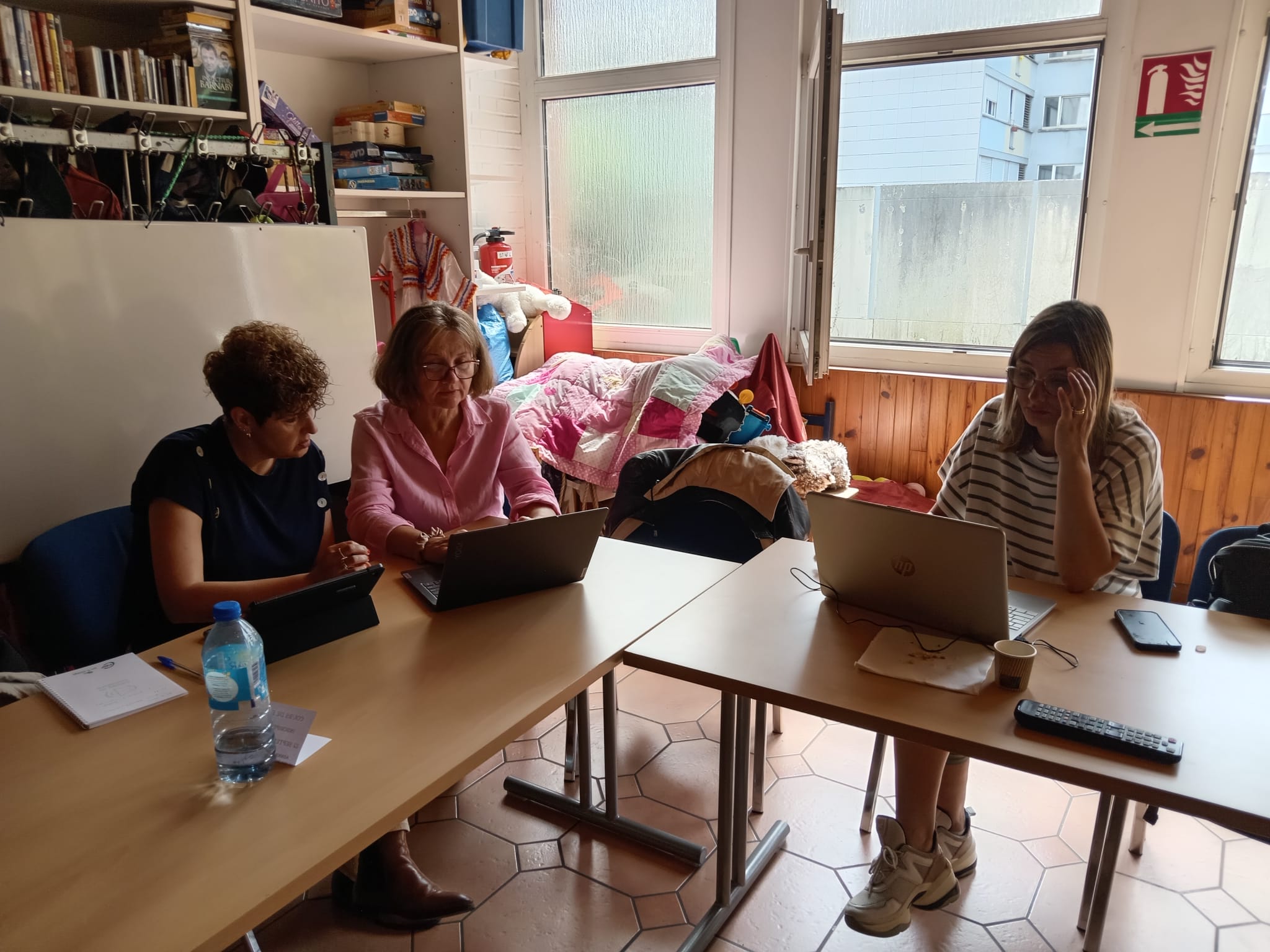
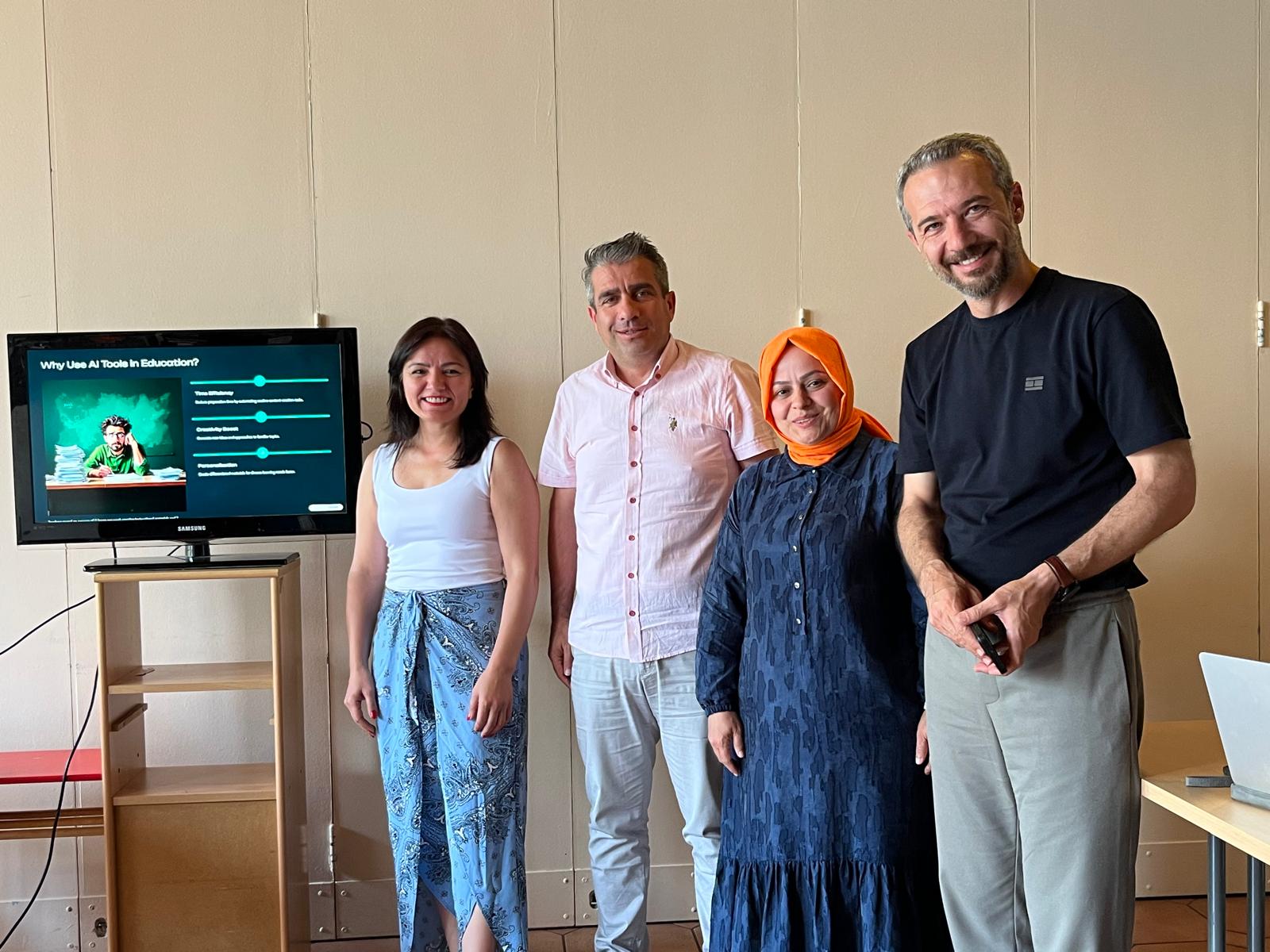
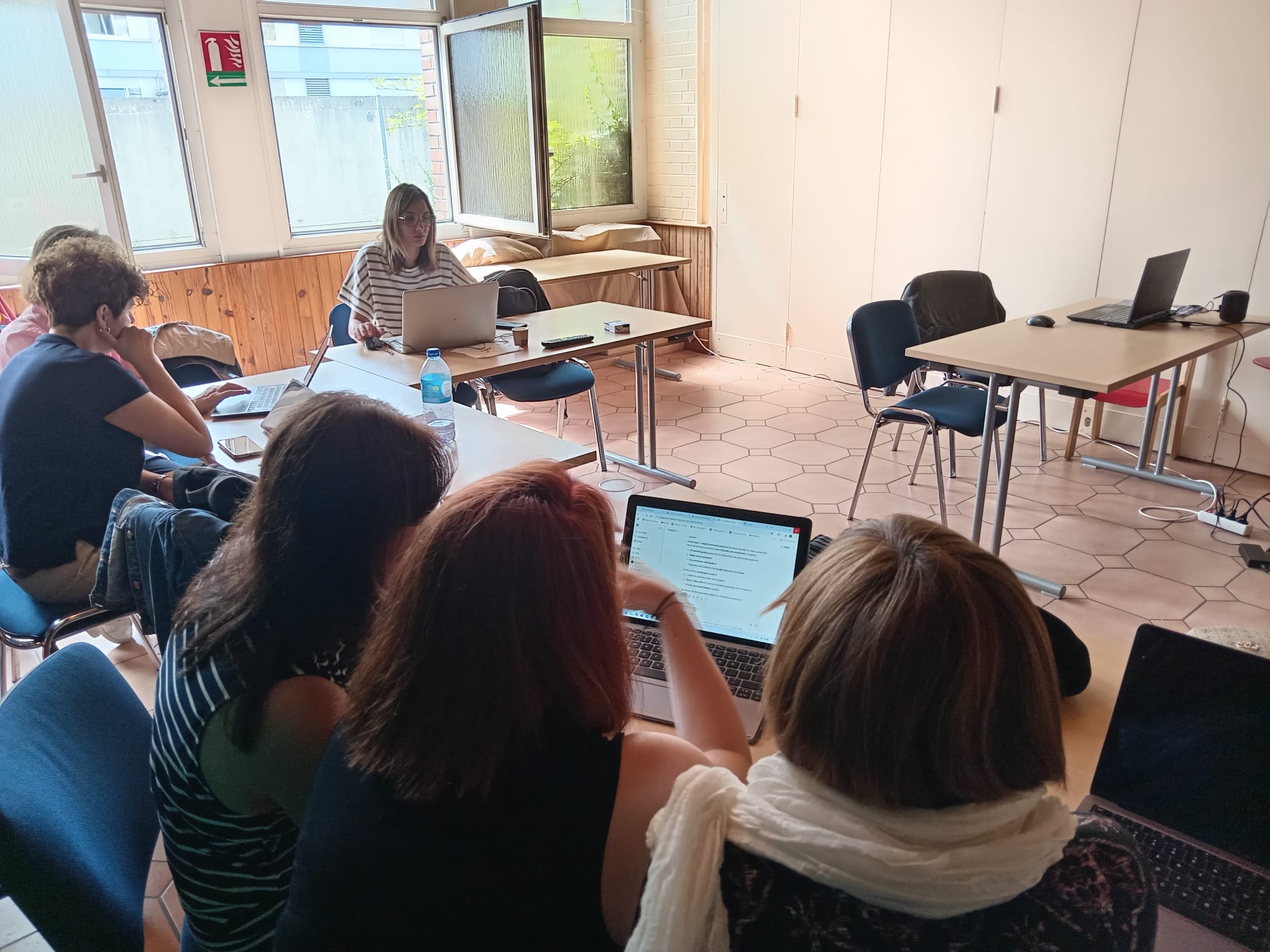
Innovation contest, project presentations, and feedback sessions. Discussion on AI-based learning analytics, sustainable technology, and the future role of educators in an AI-powered world.
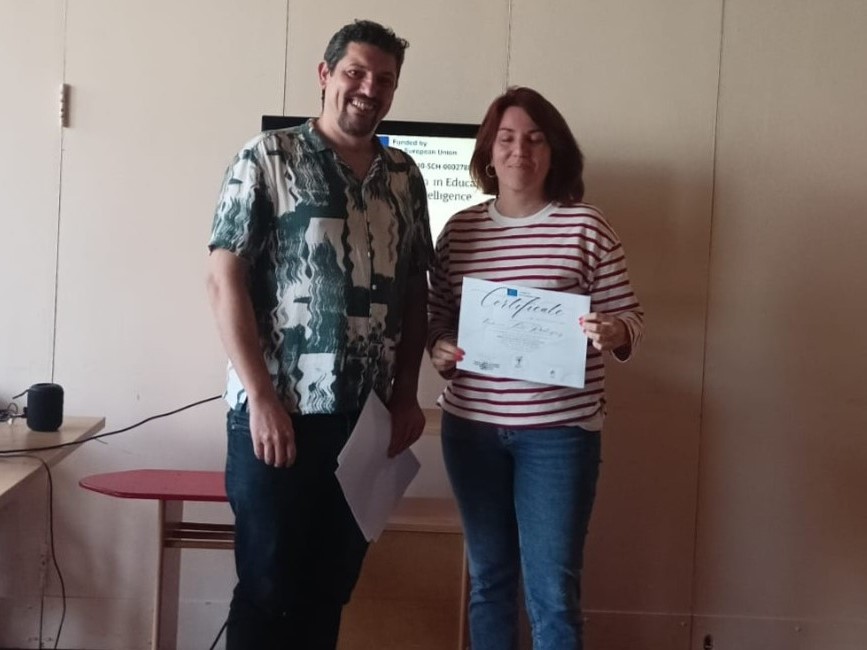
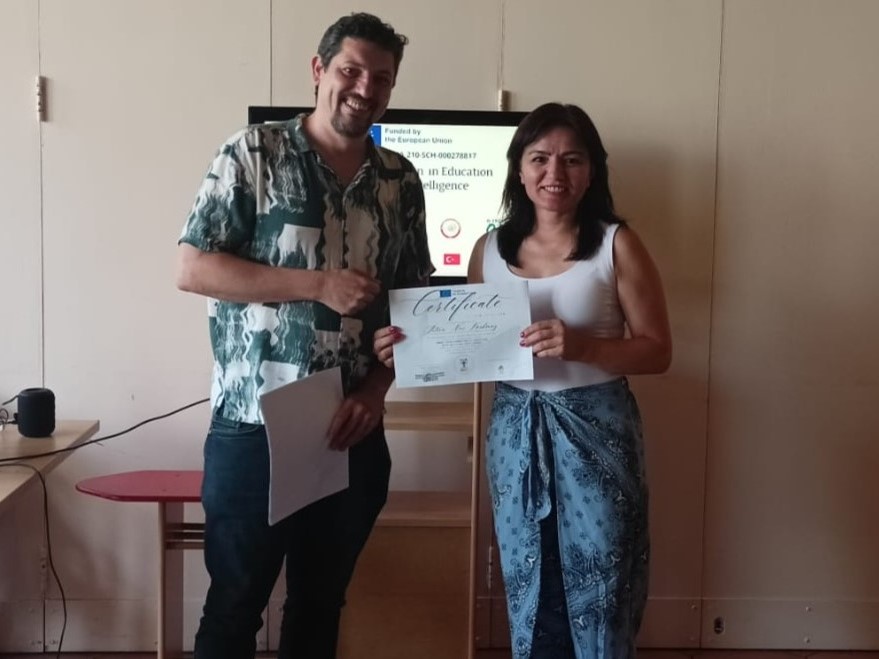
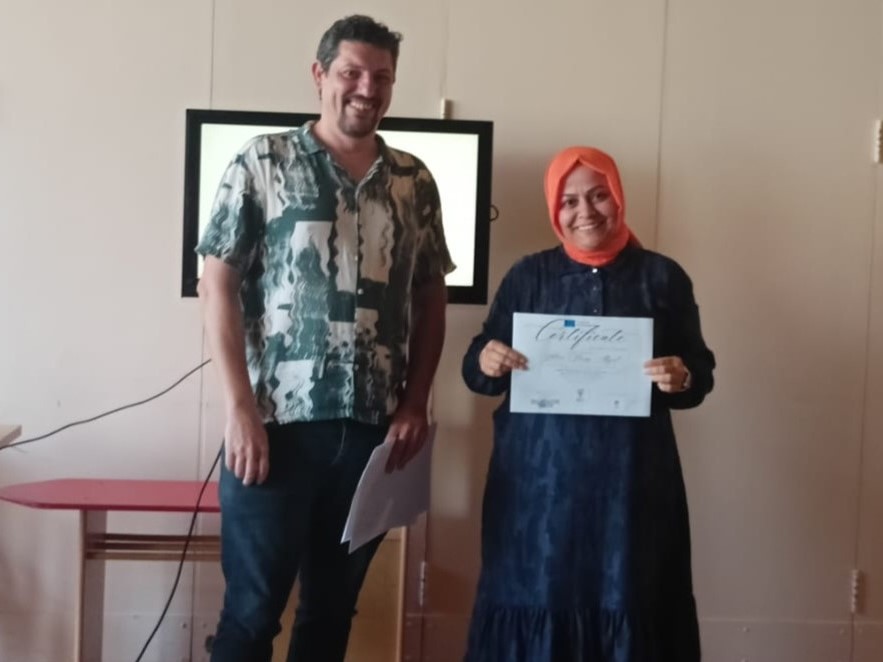
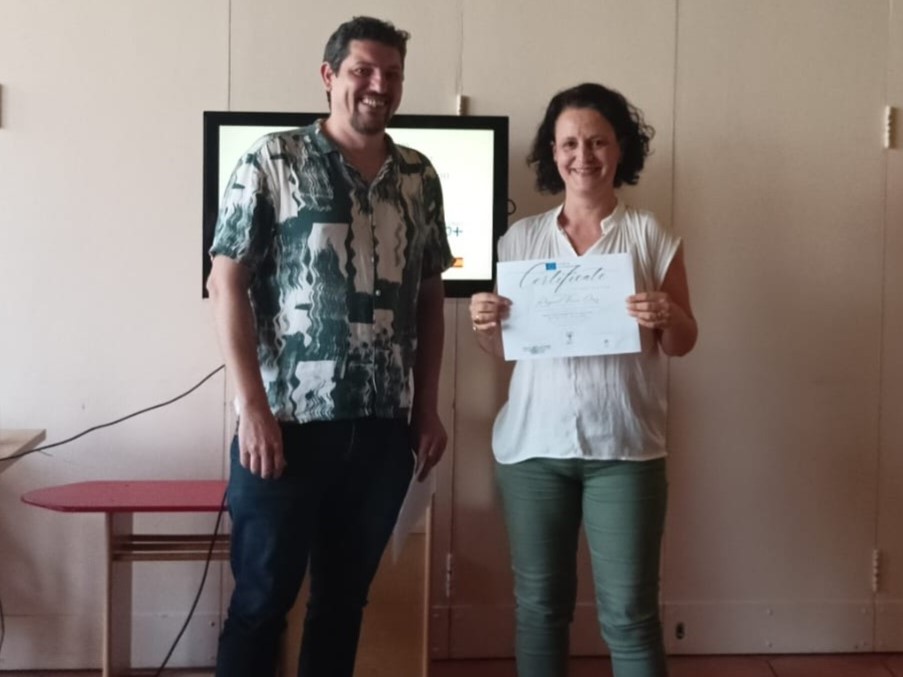
1.AI-in-Education-A-5-Day-Training-Program-for-Youth-Workers
📄 Download Project Ressources (PDF)2.What-is-AI-and-How-is-it-Used-in-Education?
📄 Download Project Ressources (PDF)3.Integrating-AI-into-Instructional-Design-Enhancing-Youth-Work
📄 Download Project Ressources (PDF)3.1.AI-Image-Generation-Tools-for-Education-and-Creation
📄 Download Project Ressources (PDF)4.AI-Tools-Transforming-Education-A-Practical-Guide-for-Educators
📄 Download Project Ressources (PDF)5.Mastering-Project-Management-Tools-Trello-and-Slack-for-Teachers-and-Youth-Workers
📄 Download Project Ressources (PDF)6.AI-Powered-Tools-for-Student-Success
📄 Download Project Ressources (PDF)7.Empowering-Youth-Work-with-AI-and-Digital-Tools
📄 Download Project Ressources (PDF)8.AI-Tools-for-Youth-Work-Enhancing-Engagement-and-Development
📄 Download Project Ressources (PDF)8.1.Ethics-and-Artificial-Intelligence-in-Education-Challenges-Issues-and-Perspectives
📄 Download Project Ressources (PDF)8.2.Essential-Measures-for-Student-Data-Security-and-Confidentiality
📄 Download Project Ressources (PDF)9.Technology-is-fundamentally-transforming-education
📄 Download Project Ressources (PDF)10.Empowering-Teachers-with-AI-A-New-Era-of-Professional-Development
📄 Download Project Ressources (PDF)11.Developing-Digital-Pedagogy-with-Artificial-Intelligence-How-AI-is-Transforming-Teaching-Methods
📄 Download Project Ressources (PDF)12.AI-Supported-Teaching-Methods-Strategies-Enhanced-by-AI-and-Their-Classroom-Impact
📄 Download Project Ressources (PDF)AI-for-Translation
📄 Download Project Ressources (PDF)Best-AI-Tools-for-Learning-a-Language-in-2025
📄 Download Project Ressources (PDF)Best-AI-tools-for-subtitling-videos-in-2025
📄 Download Project Ressources (PDF)Best-AI-Video-Creation-Tools-for-Educators-in-2025
📄 Download Project Ressources (PDF)